Tuesday, December 18, 2018

Which Amazon Echo speaker should you buy?


When Amazon first launched the Echo smart speaker, it was easy to work out which one to buy. Just over a year on, the product range has ballooned, including everything from small and cheap devices up to smart speakers with built-in screens. In addition, there are even some third-party devices that have Amazon’s Alexa smart assistant built-in.
The breadth of the range means that you’re very likely to find a smart speaker to match your needs perfectly. Conversely, whittling down your options has become more complicated. We’ve now updated this guide to cover the new Echo speakers released recently.
The all-rounder – Amazon Echo 2nd Generation (2017)
The first Echo was good, but it was fairly basic in terms of its overall look and was that little bit too expensive. Step forward, the second-generation Amazon Echo.
With prices starting at just £89.99, it’s near-on £70 cheaper than the original Echo. Even better, this standard Amazon Echo is smaller and comes in a wider array of finishes than its predecessor. Truly, this product has been designed to fit into a variety of homes, and it’s one attractive-looking smart speaker.
Audio quality lags behind the best Bluetooth speakers, but the Amazon Echo is still more than good enough to fill a decent-sized room and for occasional listening. Its audio prowess is better suited to voice content, such as radio, talking books, or for replying to your questions.
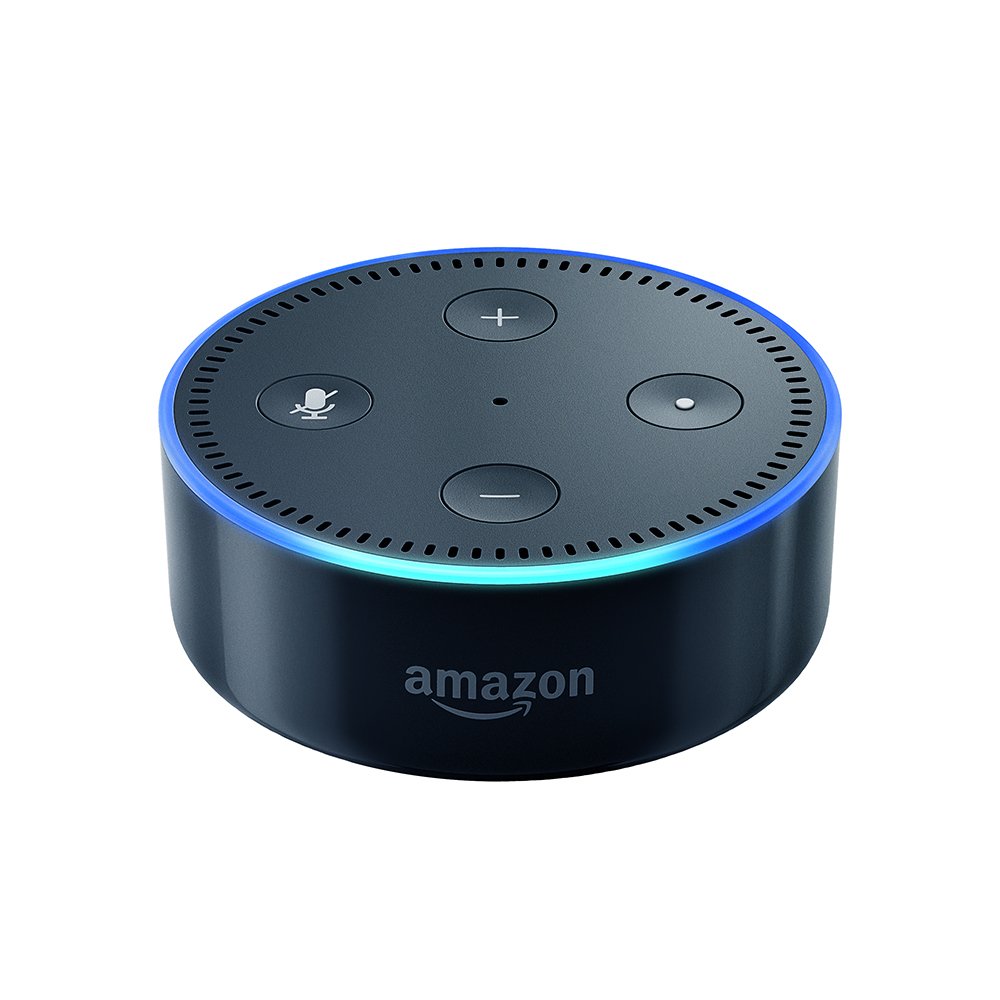
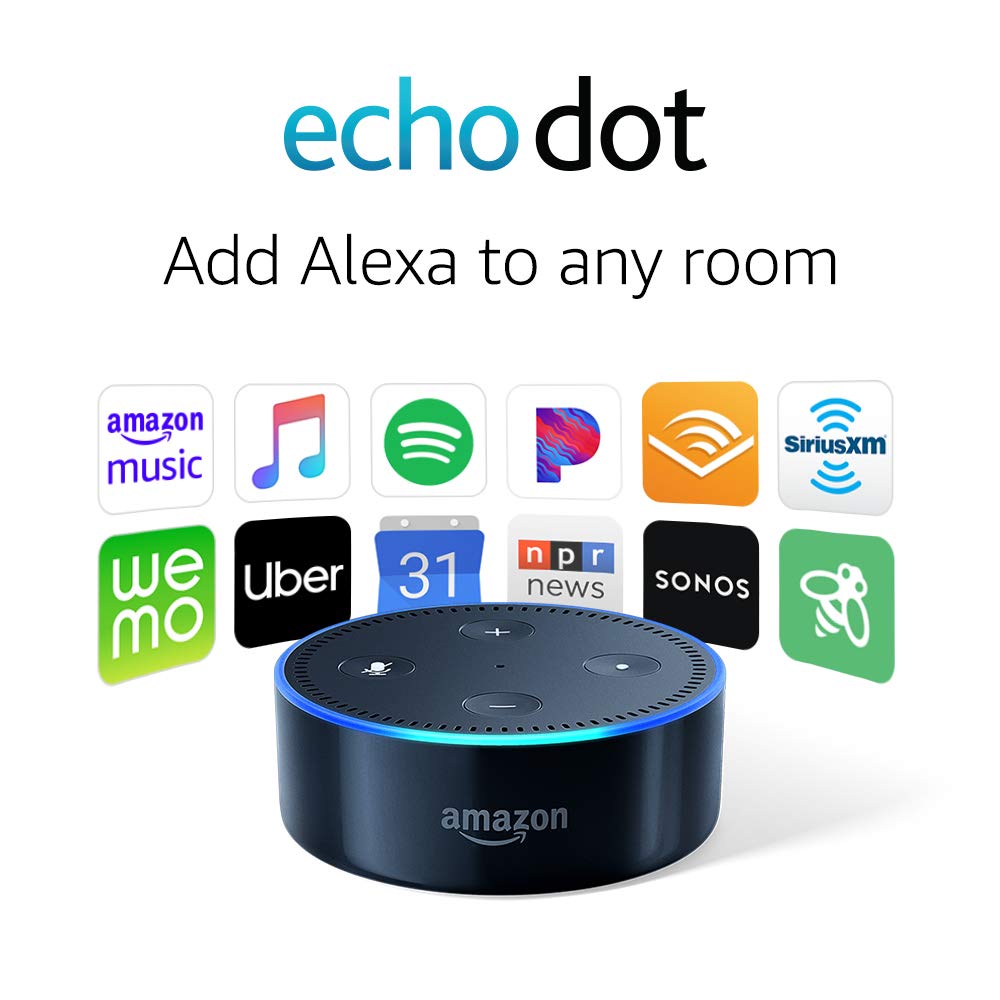
For general smart home control and occasional radio – Amazon Echo Dot (3rd Gen)

The Amazon Echo Dot (3rd Gen) is a big improvement over the original Dot (featured below). It’s nicer to look at and has upgraded audio that makes it easier to understand. And, you can even use the new Echo Dot for a bit of music or, more realistically, listening to radio.
This model still has the 3.5mm audio output and Bluetooth option, so you can connect it to a more powerful stereo. That feels like a slight waste of its capabilities, and if you want something to hook up to an existing stereo, the older Echo Dot is a cheaper option.
For use around your home, the new Echo Dot is a far better product than the older model, and its clearer audio improves the entire Alexa experience. Even better, it’s the same 

While the original Amazon Echo Plus felt like a bit of an odd product, with its smart home hub not giving the level of control we’d expect, the new model is an improvement. Now, with the Amazon Echo Plus (2nd Gen) you get a better overall experience.

First, the speaker has been redesigned and looks far nicer. Internally, Amazon has boosted the audio quality, and the new Echo Show is now the best-sounding Echo speaker. That’s particularly true if you use the speakers in a stereo pair, and if you then add in an Amazon Echo Sub subwoofer, too. With two Echo Shows and a Sub, you get a music experience that rivals other smart speakers.

Monday, December 17, 2018

Why Big Tech is breaking free of Silicon Valley


Looking for a new job in the tech industry? You might want to consider skipping the trip to Silicon Valley and heading to New York City. In a little more than a month, Amazon (AMZN), Apple (AAPL), and Google (GOOG, GOOGL)—three of the world’s biggest technology companies—have announced expansions within the Big Apple.
Google's announcement Monday calls for the company to spend more than $1 billion on capital improvements including the leasing or acquisition of three properties on Manhattan's West Side. In total, Google CFO Ruth Porat said in a blog post, the company will have enough new space to more than double its existing 7,000-person workforce in the city. The company's current headquarters are located in a massive building at West 15th Street and the Chelsea Market building next door.
Google's announcement, alongside Amazon's and Apple's, is proof that tech companies are making major moves outside of Silicon Valley and chasing workers across the country. Part of the reason for the move is to break free of the insular nature of Silicon Valley and draw new employees with unique ideas. Of course, moving into regions also gives them a foothold to guide policy and influence their new homes.
Bringing the jobs to the people
Throughout the explosive growth years of the tech industry, thousands of engineers, developers, and coders poured into Silicon Valley with the hopes of snagging a coveted position at one of the area's big-name tech firms.
Cities like New York, however, weren't resting while Silicon Valley scooped up all of those high-paying jobs. In September 2017, Cornell University officially opened its massive Cornell Tech campus on Roosevelt Island between Manhattan's East Side and the Queens neighborhood of Long Island City as part of the city's push to draw tech talent and jobs.
"Increasingly we're seeing tech companies looking for things that are uniquely available in large cities like New York," explained Julie Samuels, executive director of Tech:NYC, a New York-based industry group that seeks to attract tech jobs to the area. Samuels said wish list items companies are searching for in cities include universities, cultural and art institutions, public transportation, and diverse candidate pools.
"With an added 1.7 million square feet and capacity to double its local workforce, Google will increase its contributions to our community while shaping a larger shift in our local economy," Samuels said in a statement following Google's announcement.
"There can be no doubt that the tech sector will be leading the way for New York’s future—and between this move and Amazon’s HQ2 selection, it’s clear our city has the talent and ability to be the tech leader of the future.”
From east to west and in between
It's not just New York City that's benefiting from the growth in tech jobs outside of Silicon Valley. Austin, Texas; Portland, Oregon; Boston, Massachusetts, and Phoenix, Arizona have seen increased job opportunities from major tech companies. Such locations offer tech companies a way to attract employees who aren't so focused on life in the Valley.
"The Valley creates Valley think, and you're out of touch with real customers in the Valley," explained vice president and analyst at Forrester Research Ted Schadler.
It's not just about being able to attract talent and leaders from outside of Silicon Valley, though. By moving into cities beyond the region, Big Tech can spread its influence to a greater number of industries and institutions.
"They want to have local influence," Schadler explained. "They want to have influence over the communities and institutions in those locations. In New York they want to have influence over financial institutions and the media. In Washington they want to have influence over the government."
With more tech companies expanding outside of the valley, Big Tech will need to be wary of how it plots its expansion. As Amazon proved with the announcement of its HQ2 in Long Island City, Queens, not every neighborhood is willing to welcome these huge companies with open arms.